Some Notes on Spinning
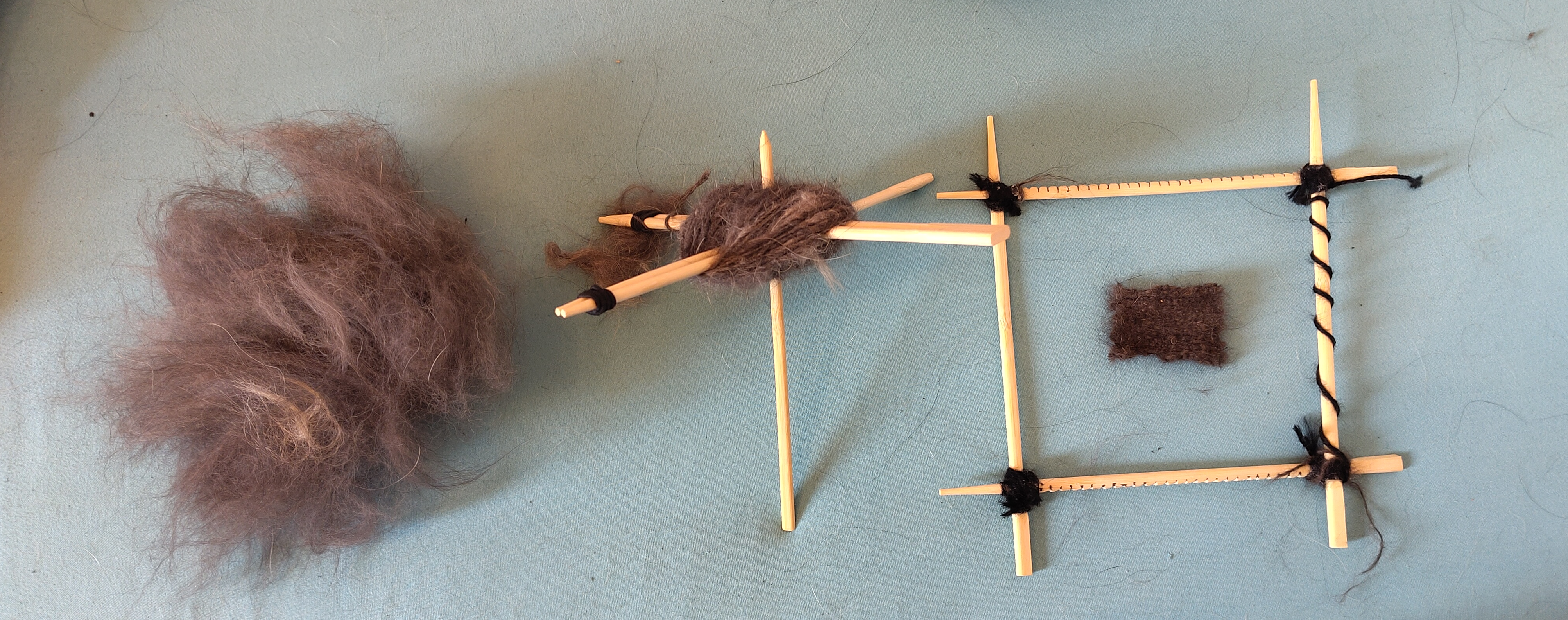
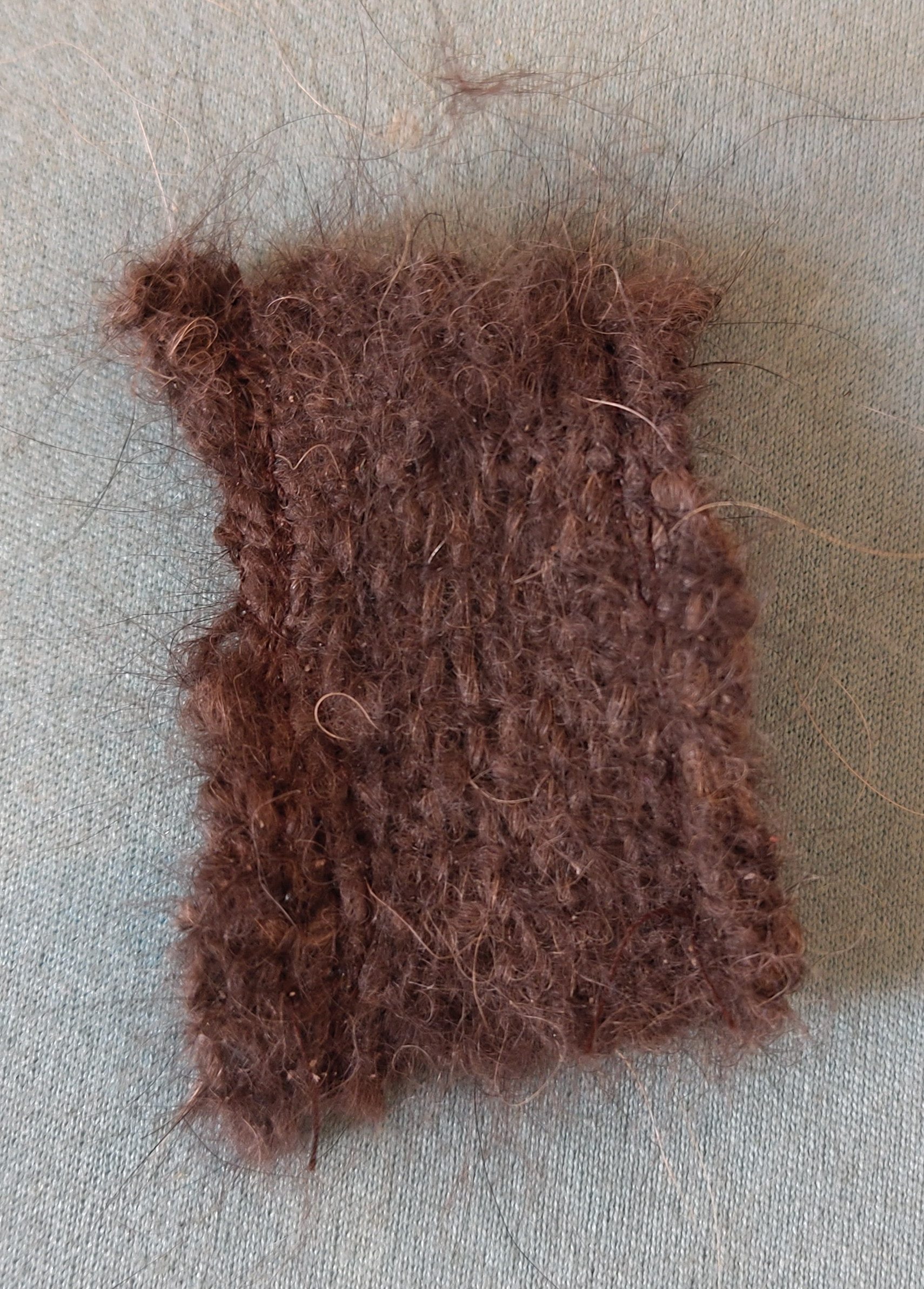
I made a piece of fabric over the last weekend. Completely with things I had lying around the house. It is a very small piece of fabric, hemmed on my sewing machine and it may not seem like much, but as I go through the process I hope you will see why I find it to be important.
Step 1: Get a dog?
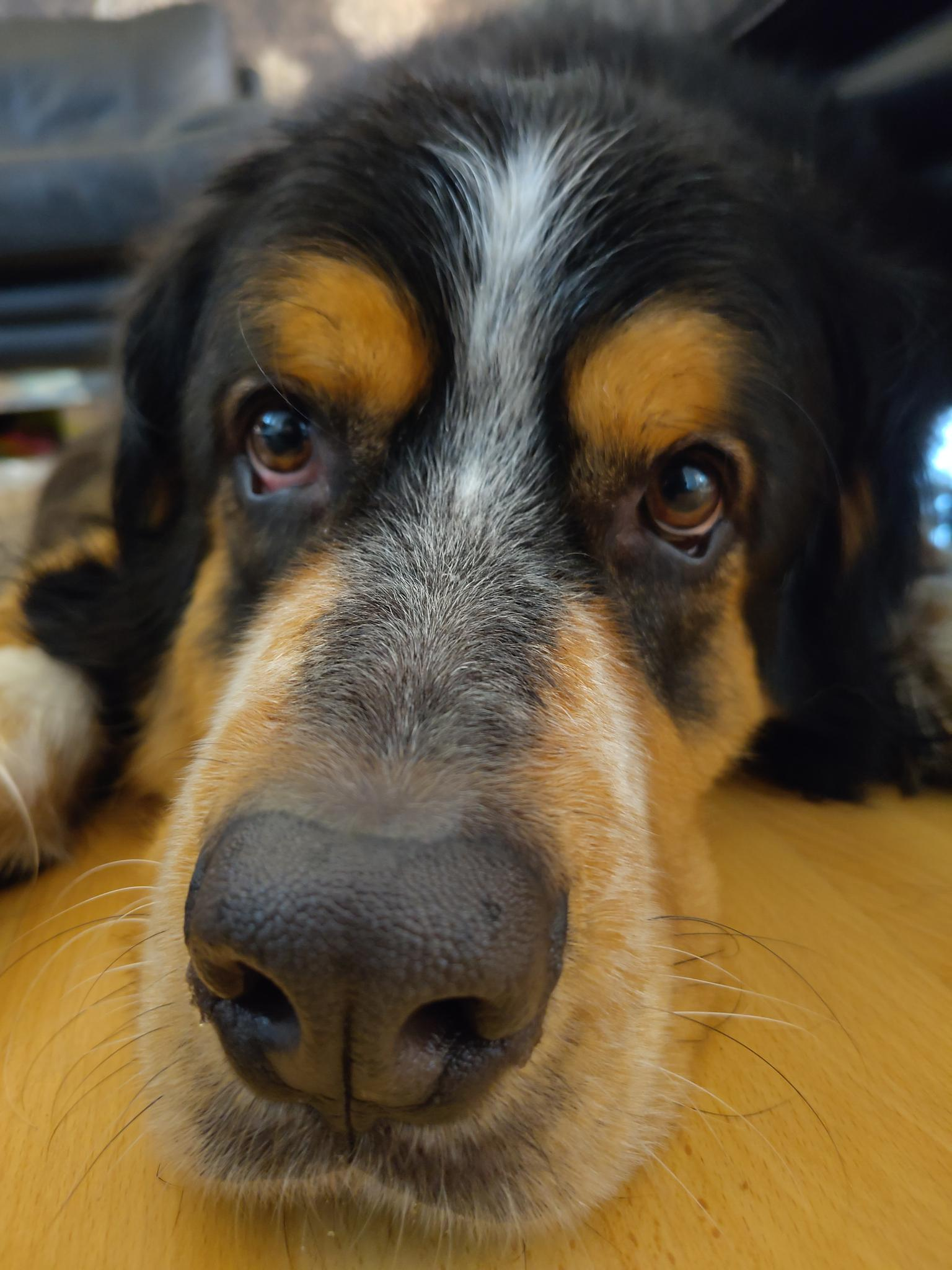
So, this project was only possible thanks to Atlas. He is a 70kg (135 lbs) Bernersennenhund/Pyrenäen cross (Bernese Mountain Dog/Great Pyreneese), and the source of that swatch of fabric up there.
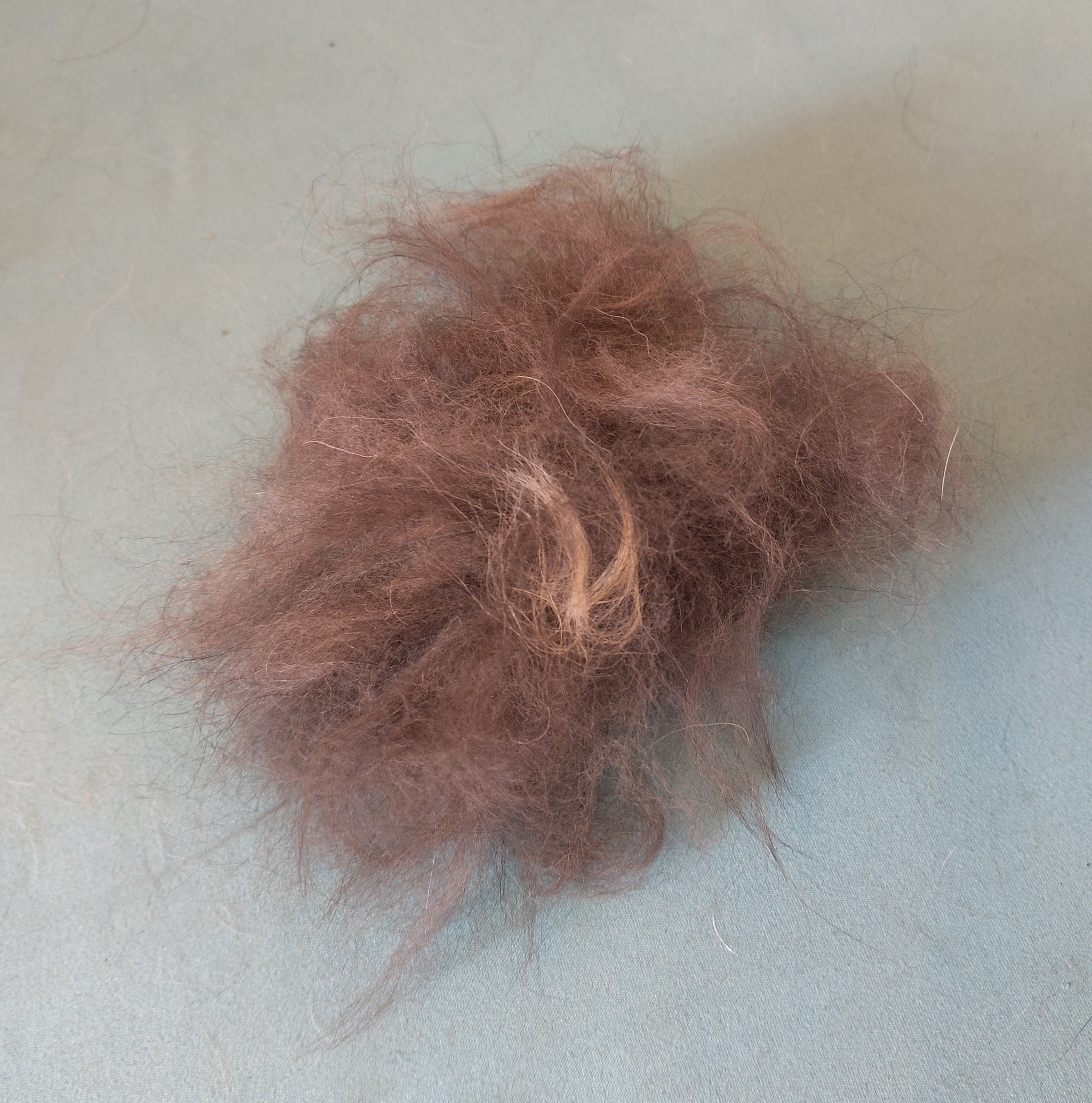
 My spouse was kind enough to save his fur while grooming him for me to turn into fabric, yarn, and string. I have a whole bag of the stuff, but this is a nice fluffy pile:
Step 2: Eat too much Asian carryout and make a spindle.
Almost everything I used for this project is made of yarn and chopsticks. Why? Because I had them. I have used fancy spinning wheels in the past, but a drop spindle is the most period accurate for Æthelric. I plan to go out to a park, find a nice straight stick, and try making a more period-appropriate spindle. For now, I have chopstick spindle.
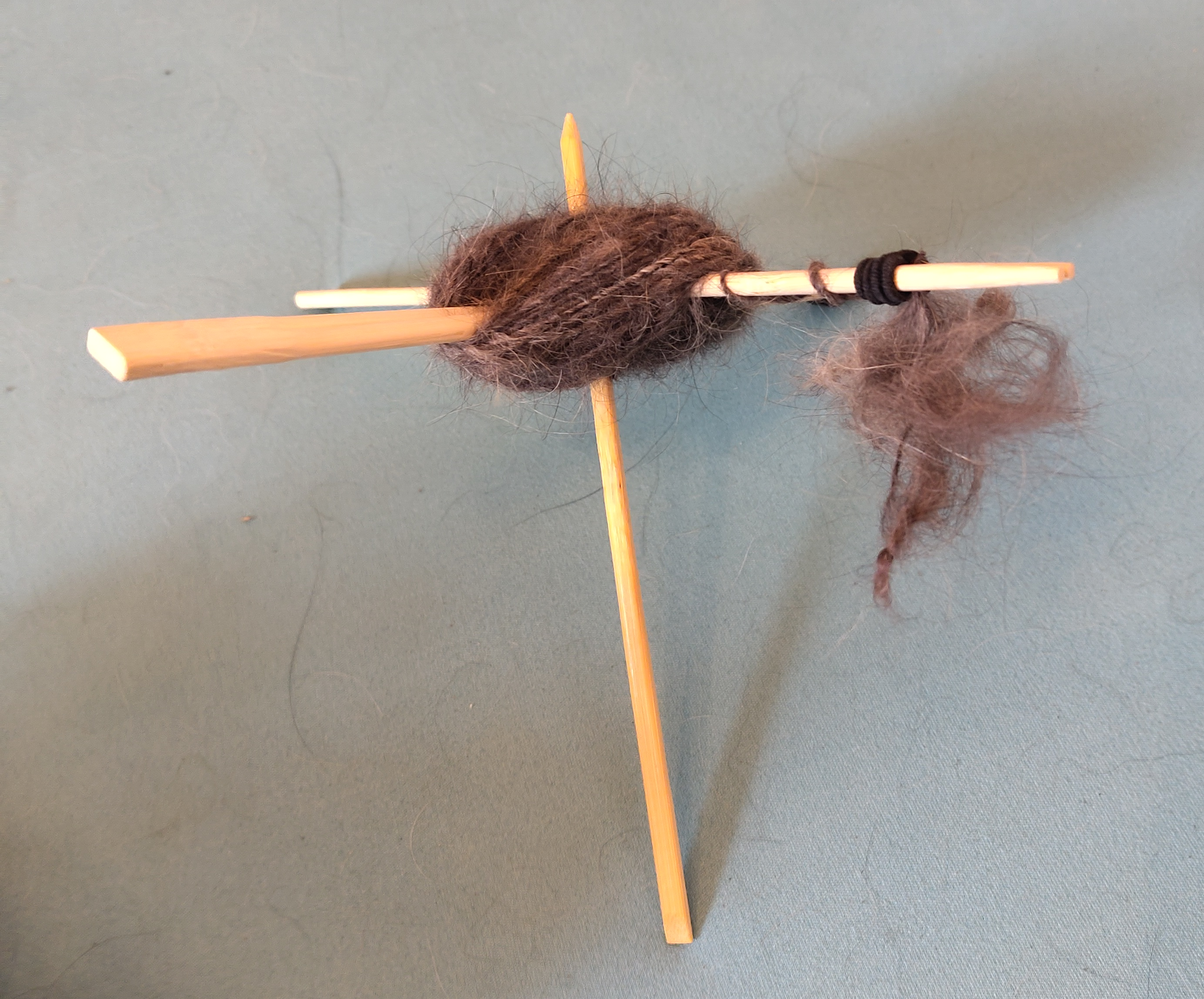 There may be some purists out there reading this cringing that I have not discussed washing or carding this fur. That is because I didn’t! :D
I will wash the fabric, and yarn if I ply it to get the oils out. I remove anything else I find in his fur while spinning. As fur (ha) carding, I do not see a need to when spinning dog fur. I have carded the fur in the past, and I haven’t found a lot of difference in how it spins. This seems to work well enough.
For what it’s worth, I do tuft it out by hand before spinning it, so that does some alignment of the fur.
The spindle is made by putting two pairs of chopsticks at a 90 degree angle to each other around a central spindle. I did carve some notches in the central staff of the spindle to keep them in position. I kept the chopsticks unbroken on one side, and then used hair ties (yarn lashing would work here) on the open ends to hold them onto the spindle by tension.
Step 3: MORE CHOPSTICKS!
After spinning the fur on the drop spindle, I warped up a little frame loom that I lashed together with yarn and chopsticks. (Chopsticks are a fantastic tool. I don’t know what to tell you.) I used a file to make some notches 5mm apart to keep the threads sorted. (I also used a chopstick as a shuttle. :D)
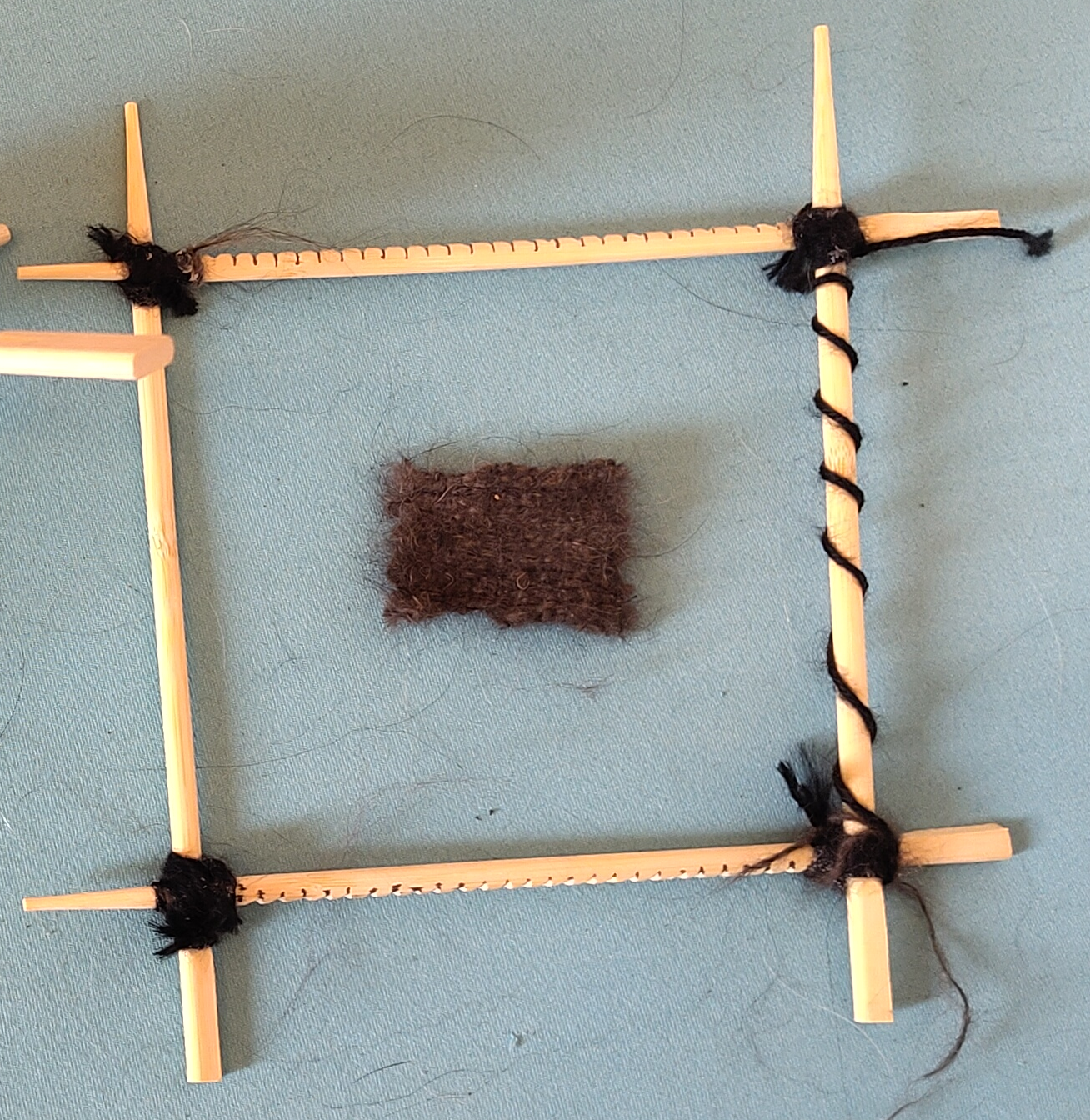
On this loom, I wove the sample fabric above with a simple plain-weave pattern. (For those not in the loop on that, a plain weave is over-under-over-under and is the simplest form of weave.)
Some Thoughts
I really like Fibre Arts, so I am a bit biased, but having a hand-spun, hand-woven swatch of test fabric is pretty amazing to me. I do plan to make a tunic this way after I have moved to more permanent housing and can set up a warp-weighted loom. For right now though, I have plenty of work just spinning the threads!
The complete set of tools and a rough order of the fabric was created were pretty simple to make, and if you have a dog and a free weekend, it might be worth giving a try!